The recent World Cup Final between Argentina and Spain saw a noteworthy absence: no players from Serie A were present on the field. This marks the first time in 50 years that the Italian league has been completely unrepresented in a World Cup's concluding match.
In a match held in New Jersey, Nico Gonzalez was the only player linked to an Italian club, yet his involvement was under a loan agreement with Atletico Madrid, where he spent the entire 2025-26 season. As a result, he was officially registered with Atletico, not Juventus, during the tournament.
Absent Serie A Stars
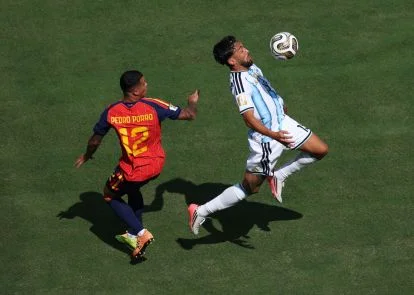
Both Lautaro Martinez, captain of Inter, and young prospect Nico Paz from Como remained on the bench throughout the match, emphasizing the unusual nature of this event. The last occasion Serie A had no players involved in a World Cup Final was back in 1978 when Argentina triumphed over West Germany.
The Decline of Serie A's Global Presence
Serie A has long been celebrated as one of Europe’s top football leagues, boasting legendary teams and players who have left a lasting mark on the sport. However, the absence of players from this prestigious league in a World Cup Final raises serious questions about its current standing and influence. In the past, viewers could expect to see stars from teams like Juventus, AC Milan, and Inter Milan gracing the biggest stages, but recent trends indicate a shift.
Historically, Serie A produced some of the most iconic footballers, from Paolo Maldini to Alessandro Del Piero. These players not only competed at the highest levels but often brought their unique styles and tactical brilliance to international tournaments. But as younger leagues like the Premier League gain prominence, Serie A has faced challenges in retaining and attracting top-tier talent. The decline in international representation speaks volumes about player migration patterns driven by financial incentives and competitive prospects.
Player Development and Transfer Trends
If you're working in this space, you know that player development has turned into a major factor in modern football. Many Italian clubs have had to rethink their strategies as younger prospects increasingly prefer to look to Spain or England for opportunities. The financial allure of Premier League contracts, competitive leagues, and global brands have become enticing enough to lure players away from traditionally strong Serie A clubs. This dynamic has implications not only for the league's prestige but also for national team performances on the world stage.
Nico Gonzalez, although he has ties to Juventus, was already committed elsewhere. His story exemplifies the reality for many aspiring players — finding opportunities abroad in leagues that guarantee heightened visibility and better financial rewards. Players like Martinez and Paz's sidelining in a crucial match also reflects a trend where Serie A clubs might be more focused on nurturing local talent rather than investing heavily in foreign players, ultimately leading to a decreased pool for national selection.
Historical Comparisons and Making Sense of Change
The lack of Serie A players in the World Cup Final is striking, given the previous decades when Italian players dominated the international scene. From the 1982 World Cup triumph to the successful campaigns of the late 1990s, Serie A represented a bastion of football excellence. The revival of international success seems increasingly distant as more youth shift their dreams away from Italy.
To grasp this shift, one has to look at key historical turning points. After Italy's success in 2006, a series of scandals rocked Serie A, impacting its global image. The league has struggled with issues ranging from financial instability to concerns about violence among fans. And yet, even as clubs rebuilt, there were no significant efforts that translated to World Cup success. The cycle of regeneration hasn’t matched the similar rebounds seen in other leagues.
Future Outlook: What Lies Ahead for Serie A?
The current trajectory suggests that Serie A must strategically reposition itself if it hopes to regain its international standing. This can be achieved through fostering youth academies, enhancing scouting programs, and creating more pathways for young talent to develop within the league. Furthermore, clubs could benefit from aligning their philosophies with newer generations of talent, focusing on tactics and playing styles that resonate with them.
And yet, revitalization won't occur overnight. The league needs to grapple with its image and address the substantial competition posed by rival leagues, particularly with the influx of TV revenue elsewhere. Restoring Italian football’s luster requires both considerable effort and a willingness to adapt to modern trends. The decline in international representation is a significant signal for change, and failing to respond could lead to more years of diminished influence.
The implications extend beyond commercial interests; they touch upon national pride. An Italy without its stars on the World Cup stage is an Italy that risks losing its historical narratives in football. In light of this World Cup's outcome, Serie A finds itself at a critical crossroads, facing decisions that will likely define its identity in the coming decades.