As pre-season football captivates Fantasy Premier League (FPL) managers, the temptation to translate friendly match outcomes into league expectations is strong. But how significant is pre-season form in predicting future successes in the actual campaign? Let's analyze the events leading up to the 2025/26 season.
Analyzing Team Performances
Referencing insights from our previous pre-season guide, it’s clear that teams like Liverpool, Manchester City, Chelsea, and Brighton achieved high win rates during their off-season matches. This won’t guarantee that form will carry over into the league, though. Despite their impressive summer records, these teams struggled to maintain their early momentum once the league commenced. After six weeks, Liverpool was the only team to sustain a notable performance, while others, despite strong summer statistics, found themselves languishing in the lower half of the league.
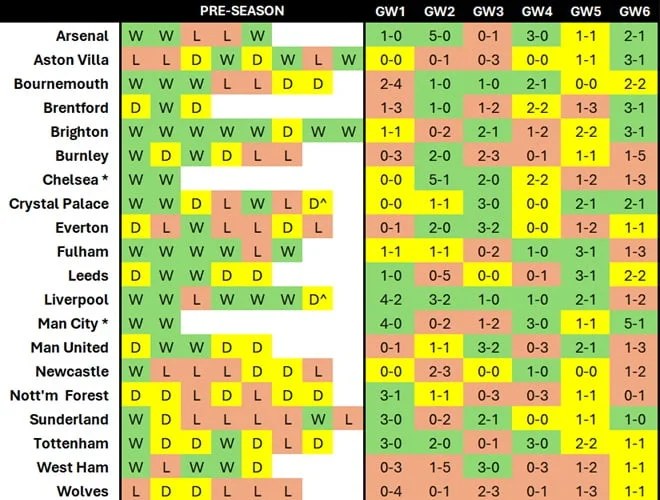
* Note that Chelsea and Manchester City participated in the Club World Cup, and the Community Shield match outcome was not included in standard pre-season statistics.
The final standings from Gameweek 6 reflect this trend starkly. Availing an average of just 5.43 points across the teams in question illustrates how quickly pre-season brilliance can evaporate. Aston Villa’s dismal start, for instance, saw them go goalless until their sixth league match. West Ham, despite generating buzz during the summer, finished the first few games relegation-zone bound. This jarring drop from expectation to reality is a common narrative in football, where pre-season success often blinds managers to the inconsistencies of competitive play.
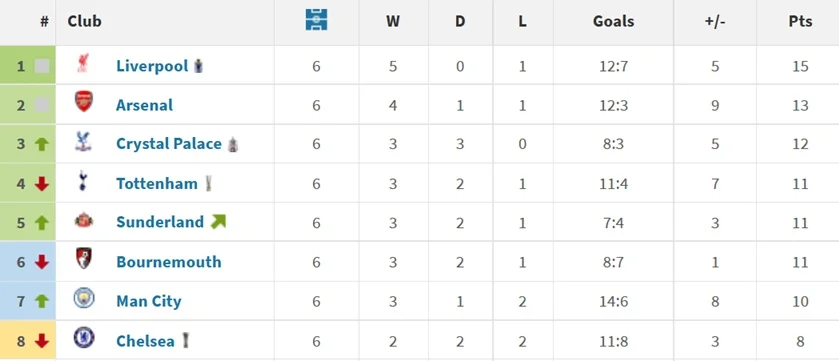
For further details, refer to standings from Transfermarkt.
In contrast, teams entering the league in disarray, such as Newcastle and Nottingham Forest, displayed underwhelming pre-season performances yet managed to turn their campaigns around. This underlines an important point: the start of the season often holds more weight than what happens in July or August. It's not uncommon for clubs to spend time figuring out their tactics and player dynamics even after the whistle has blown. Conversely, several teams mired in poor early results, such as Burnley and Wolves, found it challenging to change their trajectories. This raises questions about how early-season woes can set the tone for long-term success or failure.
Individual Player Performances
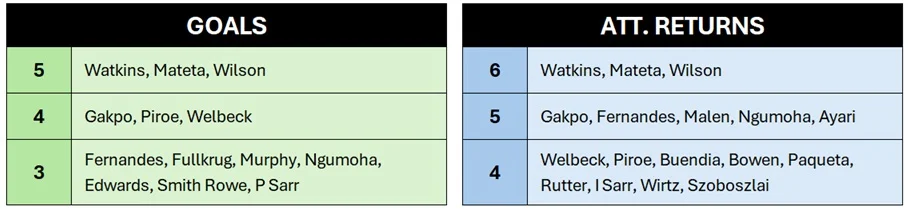
Individually, players like Ollie Watkins, Jean-Philippe Mateta, and Harry Wilson topped the pre-season scoring charts, each securing five goals. However, translating this form into the actual league has its quirks. For instance, while Fulham's Wilson had an impressive season overall, he took time to find his footing during the initial weeks, displaying the fragility of form during competitive matches compared to friendlies. Watkins' output suffered similarly early on, reinforcing the notion that dazzling pre-season statistics don't always predict future success in the brutal grind of the Premier League.
Certainly, Mateta demonstrated remarkable scoring form in crucial league clashes, but he's more the exception than the rule. Many players like Emiliano Buendia started strong in their friendlies but saw reduced minutes at the beginning of the season—raising concerns about squad rotation and tactical fit. In stark contrast, you have cases like Danny Welbeck, who faced a barren spell despite showing promise during early matches. This discrepancy highlights the sheer unpredictability of player performance once the season kicks off.
This year, Liverpool’s Dominik Szoboszlai, while showcasing moments of brilliance with a stunning goal against Arsenal, struggled to maintain consistent offensive contributions early in the league. On the flip side, players like Mohamed Salah reaffirmed their elite status with impactful performances despite a quieter pre-season. That’s a reminder for managers: established stars often have the ability to adapt, whereas newer players may take longer to integrate into the team. (And this is the part most people overlook—form isn’t just about numbers; it’s also about context.)
Strategic Takeaways for FPL Managers

The overarching lesson from pre-season is recognizing the unpredictable nature of football. Good pre-season performance doesn't guarantee league prowess, and teams failing to impress in friendlies tend to carry that momentum into the season as they search for their rhythm. For FPL managers, this presents both a challenge and an opportunity.
Your best bet? Prioritize historical performance and fixture schedules over fleeting pre-season hype that can mislead even the most seasoned managers. While pre-season can provide insights into player utilization and tactical adaptations in response to new managers, it shouldn't replace detailed analysis of past performances and match contexts. Simply put, don’t let a few good goals in friendlies dictate your team selections when the stakes are higher in competitive matches.
Keeping an eye on player rotations, injury developments, and tactical tweaks emerges as more critical than simply judging a player on their pre-season output. The aim should be to build a balanced squad grounded in reliability, rather than chasing fleeting sensations that may fade quickly once competitive play begins. FPL managers should thus arm themselves with information and critical analysis to navigate their teams through any turbulence in the early part of the season.
Looking Ahead
This brings us to an important consideration: what does this mean for the FPL community as the season develops? Early-season data can be misleading, but by staying vigilant and adaptively responding to shifting player performances and team strategies, you can better position your squad as the league unfolds. The fluidity of form is widespread across the league, and successful managers will likely be those who remain flexible in their strategies rather than anchoring themselves to pre-season glories.
Ultimately, while pre-season merits attention, it’s essential to analyze all factors beyond mere statistics to carve out genuine insights into crafting a successful FPL squad. What this spells out for you is a constantly adaptive strategy—keep your eyes peeled, and don’t ignore the signals that ongoing matches provide. Football's unpredictability should spur you to blend intuition with analytical rigor in your decision-making process.