In Fantasy Premier League, keeping a player is a decision you make again every Gameweek. That makes patience useful only while the case for owning him still holds. For me, Dominic Calvert-Lewin (£6.1m) sits on that line: he has reasons to stay in my squad, but I need to separate those reasons from the feelings attached to Leeds and to my original pick.
That distinction gets harder when a player represents more than a set of minutes, chances and fixtures. I’ve found ways to defend Leeds players before, even when my team needed a more objective assessment. Calvert-Lewin’s situation is a chance to ask a question that applies well beyond one forward: if I didn’t own him already, would I buy him now?
When club loyalty reaches the transfer market
Leeds United has personal meaning for me. On 3 December 2025, my birthday, Emil and I watched Leeds beat Chelsea 3-1 at Elland Road. It was our first Premier League match together, and the sort of day that can make clear-eyed analysis of a football club feel like a demanding assignment.
FPL, unfortunately, doesn’t award points for a great birthday. My early transfer decisions didn’t always reflect that reality. I picked Ilia Gruev (£5.0m) partly because he was Bulgarian and playing in the Premier League. Later, I added Ao Tanaka (£4.9m), another choice shaped more by affection than by the prospect of attacking returns. For a while, my squad looked more like a Leeds supporters’ club than a team assembled to score FPL points.
There’s nothing wrong with supporting a club. The problem starts when that attachment changes how we judge players. A football memory may explain why I’m drawn to Leeds assets, but it can’t tell me whether one is a good pick today.
Calvert-Lewin has a case, and that’s the complication
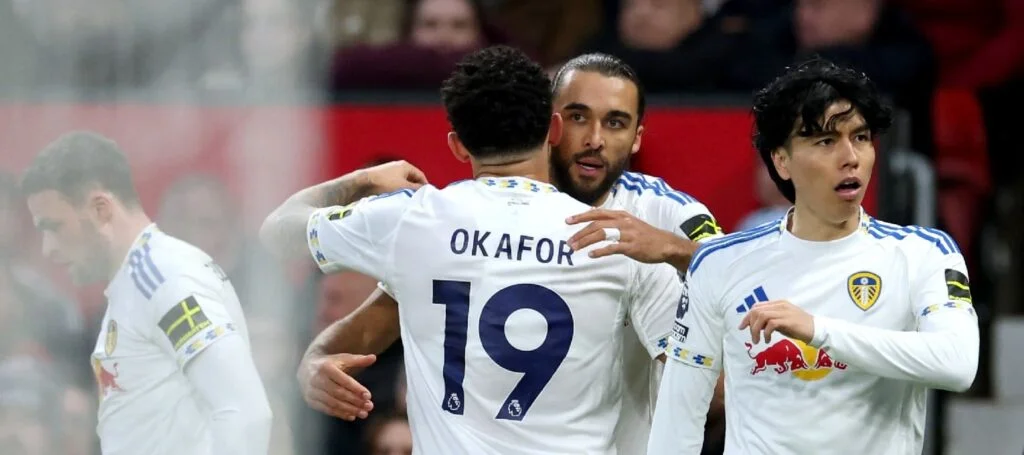
Calvert-Lewin hasn’t delivered the kind of returns that make an FPL manager feel vindicated. Still, there are sensible reasons to keep him in consideration: he’s getting regular minutes, has attacking opportunities and has upcoming fixtures that could suit him. Those points matter. They’re also exactly the sort of evidence a manager should weigh before using a transfer.
The risk is that a reasonable argument becomes a defence of a settled opinion. It’s one thing to say that a player’s minutes, chances and schedule support holding him. It’s another to look for numbers that let you keep believing in a decision you’ve already made. Expected goals, shots in the box, big chances and fixture difficulty can sharpen a judgment, but they can also be pressed into service as evidence for whichever answer we prefer.
Here’s the thing: the statistics aren’t the problem. It’s the direction we use them. When the player is from a club we love, the temptation to search for reassurance gets stronger.
Isak or a defensive upgrade?
Emil, my co-host on Her Fantasy League, thinks I should replace Calvert-Lewin with Alexander Isak (£9.2m). His view is straightforward: Isak offers more attacking potential. I’m less sure that the forward transfer is the best use of my free transfer, given Calvert-Lewin’s fixtures and the needs elsewhere in my squad.
There’s also a less admirable factor: I may not want Emil to be right. We discuss transfers often, and his suggestions can sound especially persuasive after one of his players scores. That makes the disagreement useful. It forces me to ask whether I’m judging the options in front of me or reacting to who proposed the move.
The question isn’t whether Isak will outscore Calvert-Lewin next weekend. One Gameweek can’t settle that. I need to compare their prospects over the next five or six Gameweeks, then decide whether the expected improvement justifies spending a transfer and a substantial part of my budget.
Even that comparison doesn’t happen in isolation. My defence has a problem of its own: I could replace Semi Ajayi (£4.2m) with Jan Paul van Hecke (£5.0m). If I spend the transfer and funds on Isak, I keep my current defence. If I hold Calvert-Lewin, I may be able to strengthen the back line.
So the choice is not simply Calvert-Lewin versus Isak. It’s Calvert-Lewin alongside a possible defensive upgrade, or Isak alongside the defence I already have. A transfer can look attractive on its own and still be the wrong move for a particular squad. Sometimes the mistake is spending a transfer to address the wrong weakness.
The cost of sticking with a pick

Managers often think of a bad transfer as the main source of regret: you buy a player, he blanks, and the points don’t arrive. Holding a player has a cost, too. Each new Gameweek in which you keep him is another choice to use that place in your squad on him rather than someone else.
That choice might be right. But the weeks already spent waiting don’t count as a reason to wait again. The points missed in earlier Gameweeks can’t be recovered by keeping Calvert-Lewin now. What matters is his likely contribution from this point on, compared with the alternatives and the rest of my team.
This is where the sunk cost fallacy can creep into FPL decisions. We give weight to what we’ve already put into a choice, even when it can’t be retrieved. The cost may be a transfer, but it can also be several frustrating Gameweeks, hours spent reading statistics or the conviction that a player is about to make us look right.
After a few blanks, another week of patience can feel like the sensible course simply because we’ve already waited. Then one more week feels easier than admitting that the original plan might not be working. But persistence alone doesn’t improve a player’s prospects.
A good outcome doesn’t prove a good decision
Patience sometimes pays off. A player we’ve defended for weeks may score, or even produce a double-digit return, and it’s tempting to treat the points as proof that holding him was correct. Yet one successful Gameweek doesn’t show whether the decision was sound throughout.
If another option scored more while we waited, holding might still have cost us points. And if we sell just before our player scores, that doesn’t automatically make the sale a mistake. FPL gives points for outcomes, not for the quality of the reasoning that led to a move.
Imagine two managers who keep the same striker. One holds because the player’s minutes, underlying numbers and fixtures remain encouraging. The other stays put because selling would mean admitting the transfer hasn’t worked. If that striker scores twice, both managers get the same points. Only one has a process worth repeating.
Football doesn’t make it easy to tell good judgment from good fortune. That’s why the question I try to return to is simple: would I choose this player today, knowing what I know now?
Recognising when patience has run out
There’s no universal number of blanks that should trigger a sale. Three disappointing Gameweeks may not be enough if the evidence still supports a player; five may not be enough either. The warning signs are more personal. Am I evaluating the player, or defending him? Do I keep saying the promising fixtures are just around the corner? Am I dismissing alternatives because selling would make the original pick feel wasted?
Another useful check is whether my reasons for keeping the player are still the reasons I had when I bought him. Roles change. Minutes change. A team’s form and a player’s opportunities can shift. Opinions should be allowed to change with that evidence. Changing your mind isn’t necessarily panic; it may be a response to new information.
At the time of writing, Calvert-Lewin is still in my team. Emil prefers Isak, and I’m weighing a possible defensive move instead. If Calvert-Lewin scores this weekend, I’ll probably feel pleased I held him. If Isak scores twice, Emil will probably remind me that he recommended the transfer. Neither result, on its own, will settle which decision made more sense at the time.
I’ll keep the memory of that birthday at Elland Road. I can support Leeds without giving its players extra credit in my FPL squad. For me, that’s the practical test: keep Calvert-Lewin only while the evidence supports his place, and judge the alternatives in the context of my whole team.
Patience works as a strategy when the reasons for it still hold. Once I’m keeping a player mainly because I need my earlier decision to be right, it has become stubbornness. If you didn’t own your most frustrating FPL player, would you buy him today?