Bayern’s 6-1 win over Leipzig looks less like six unrelated defensive failures than a match built around a few recurring problems. Leipzig struggled to pressure the ball in central areas, coordinate their marking, and keep their back line connected to the players ahead of it. Bayern kept finding ways to exploit that combination, with Luis Díaz repeatedly receiving the kind of one-on-one that Leipzig’s defensive structure should have prevented.
That pattern is more revealing than the scoreline. Bayern’s rotations unsettled Leipzig’s press, then their quick switches of play found space on the far side. When Leipzig did regain the ball, their own forward passes often brought little relief. The goals show how those phases fed into one another.
Leipzig couldn’t settle on a pressing trigger
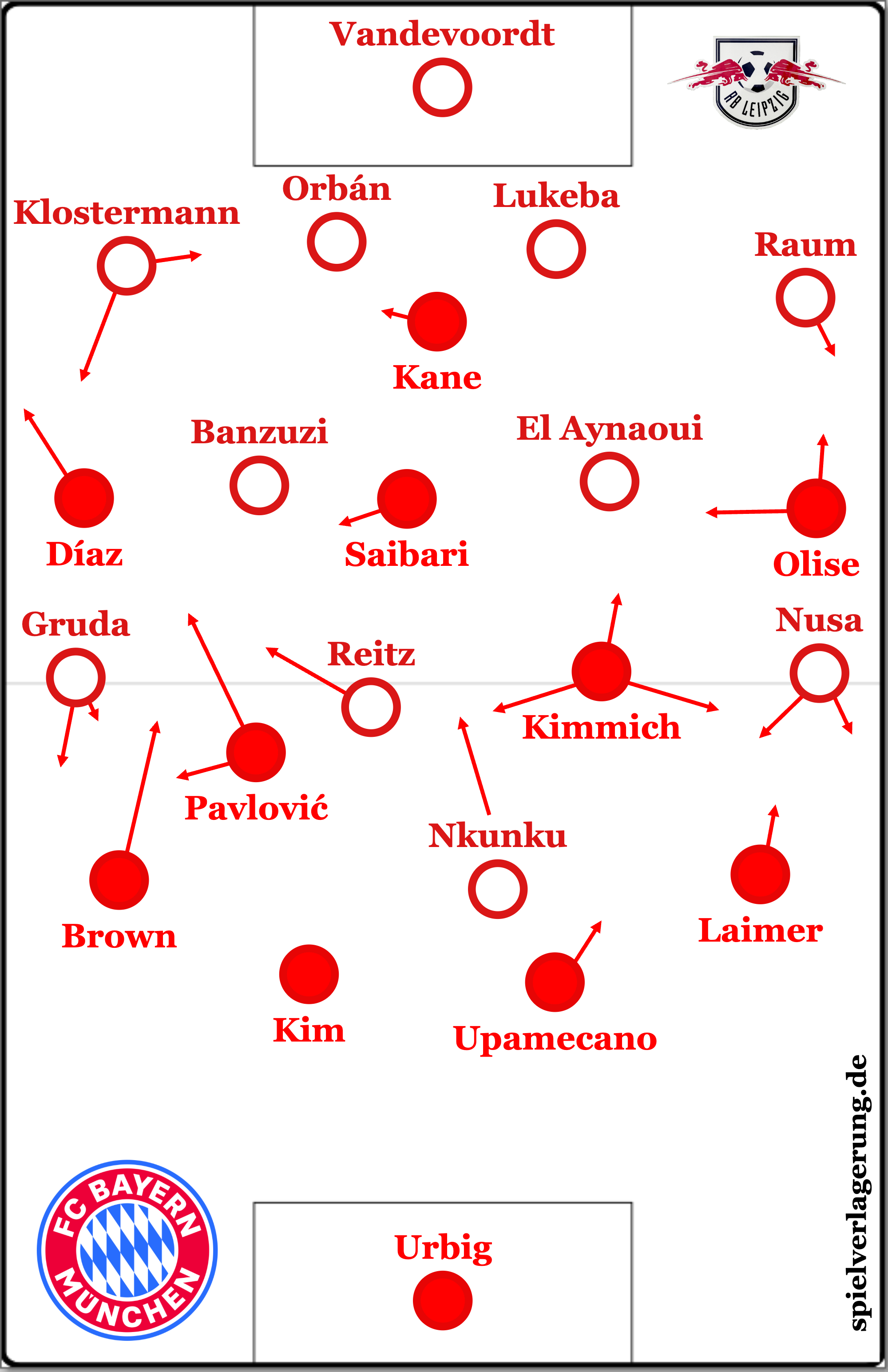
Bayern pressed high and aggressively, steering Leipzig goalkeeper Vandevoordt away from the left side of the build-up and toward longer passes. Nusa and Brajan Gruda repeatedly curved their runs toward Nathaniel Brown and Konrad Laimer, while Bayern kept an extra player available in central midfield, usually Joshua Kimmich.
That central presence narrowed Leipzig’s options. If the ball went right, Kimmich could move forward to press Raum. Instead, he often held his position in the middle, making it harder for Leipzig to progress through that area. The resulting long balls rarely led to regains, so Leipzig gained little territory or breathing room from playing forward early.
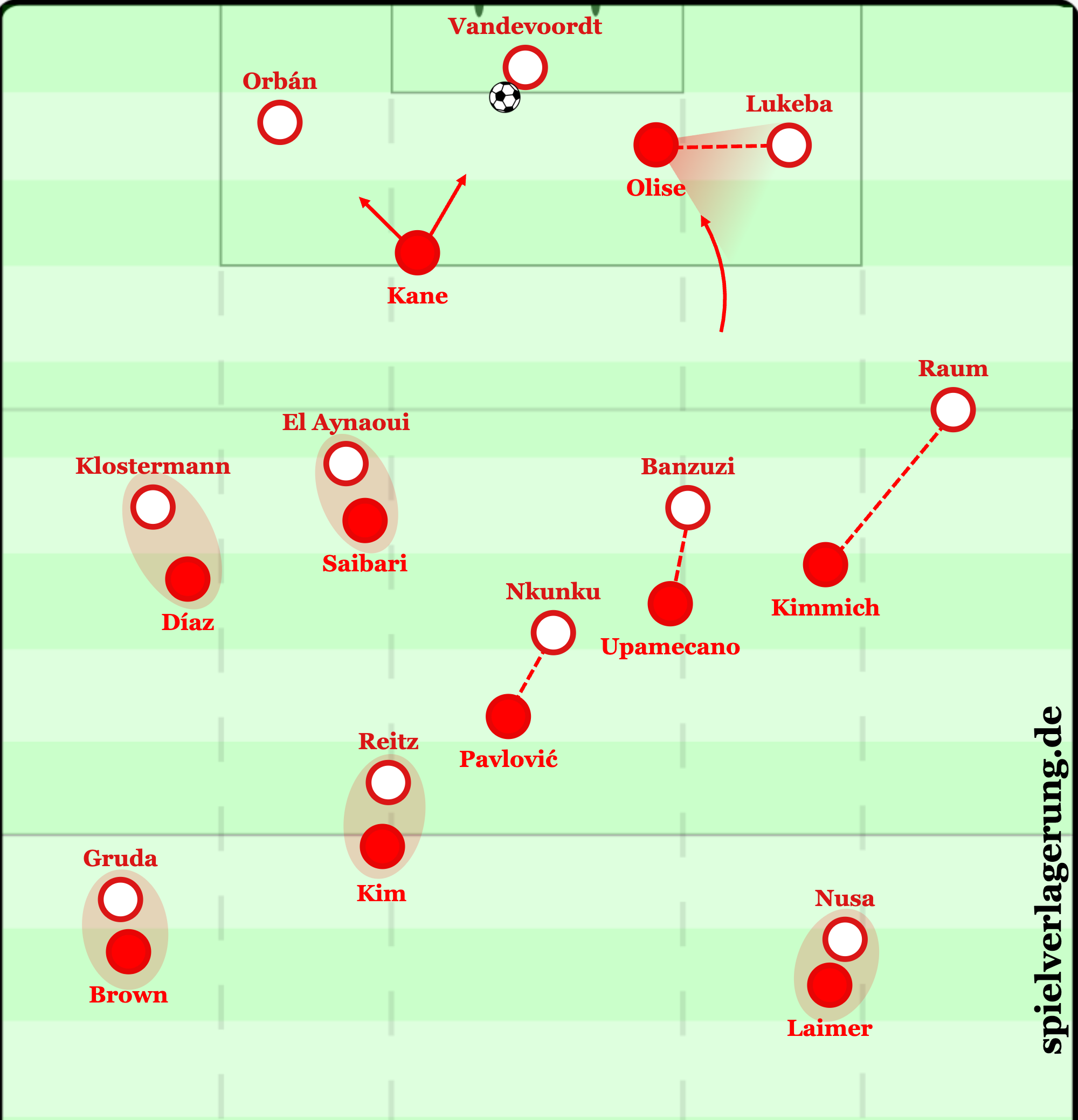
Leipzig had a different problem when Bayern built from the back: the shape kept changing. Kimmich dropped toward the right, Pavlović moved left to form a back three, and Upamecano held a wide position. Each rotation changed the pressing assignments. Leipzig’s players were left deciding who should step out and which opponent to track, and their handovers from midfield repeatedly broke down.
Bayern then used their spacing to make Leipzig’s narrow shape work against them. Olise moved into the space behind the forwards, Brown made runs through the half-space, and Luis Díaz stayed wide on the left. Saibari and Kane occupied central defenders, sometimes drawing them away from the middle. Once Leipzig had shifted toward the ball, Bayern could switch play to a less protected flank. The one-on-ones Díaz found there were a product of that sequence, not isolated moments of individual skill.
The goals made the pattern visible
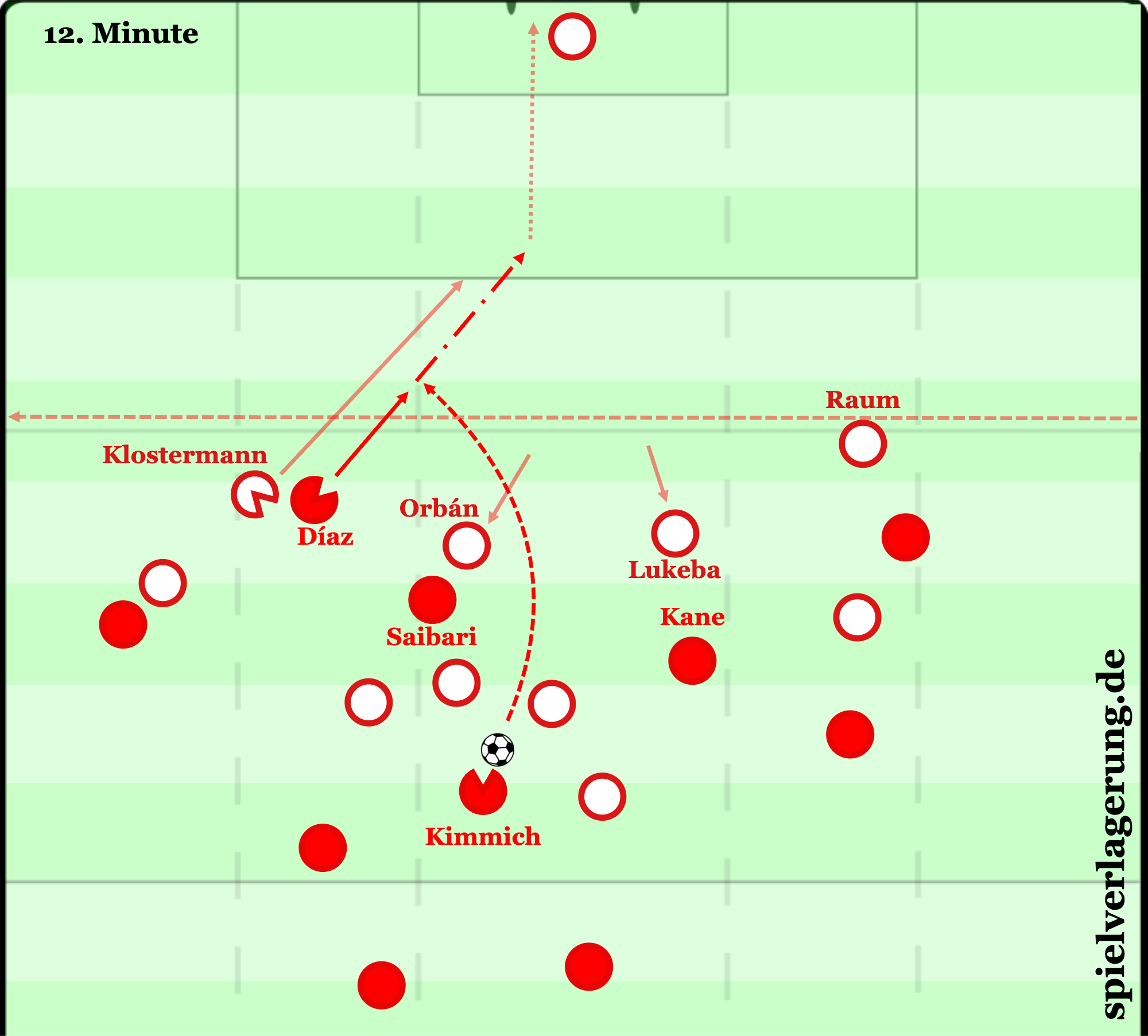
1-0, Luis Díaz (12.) — The opener set out the problem clearly. Kimmich received centrally without pressure and turned with an open body shape. Kane and Saibari occupied the area in front of the box, drawing Orban and Lukeba forward. But the full-backs stayed too deep instead of moving up with the centre-backs, while Raum’s position kept the runner onside. Klostermann remained wide, leaving the inside lane open for Díaz to run into. Kimmich’s chipped pass found him in behind.
The goal came from several defensive decisions that failed to align. Leipzig’s centre-backs stepped out, but the rest of the line did not move with them; the gap gave Díaz his route through.
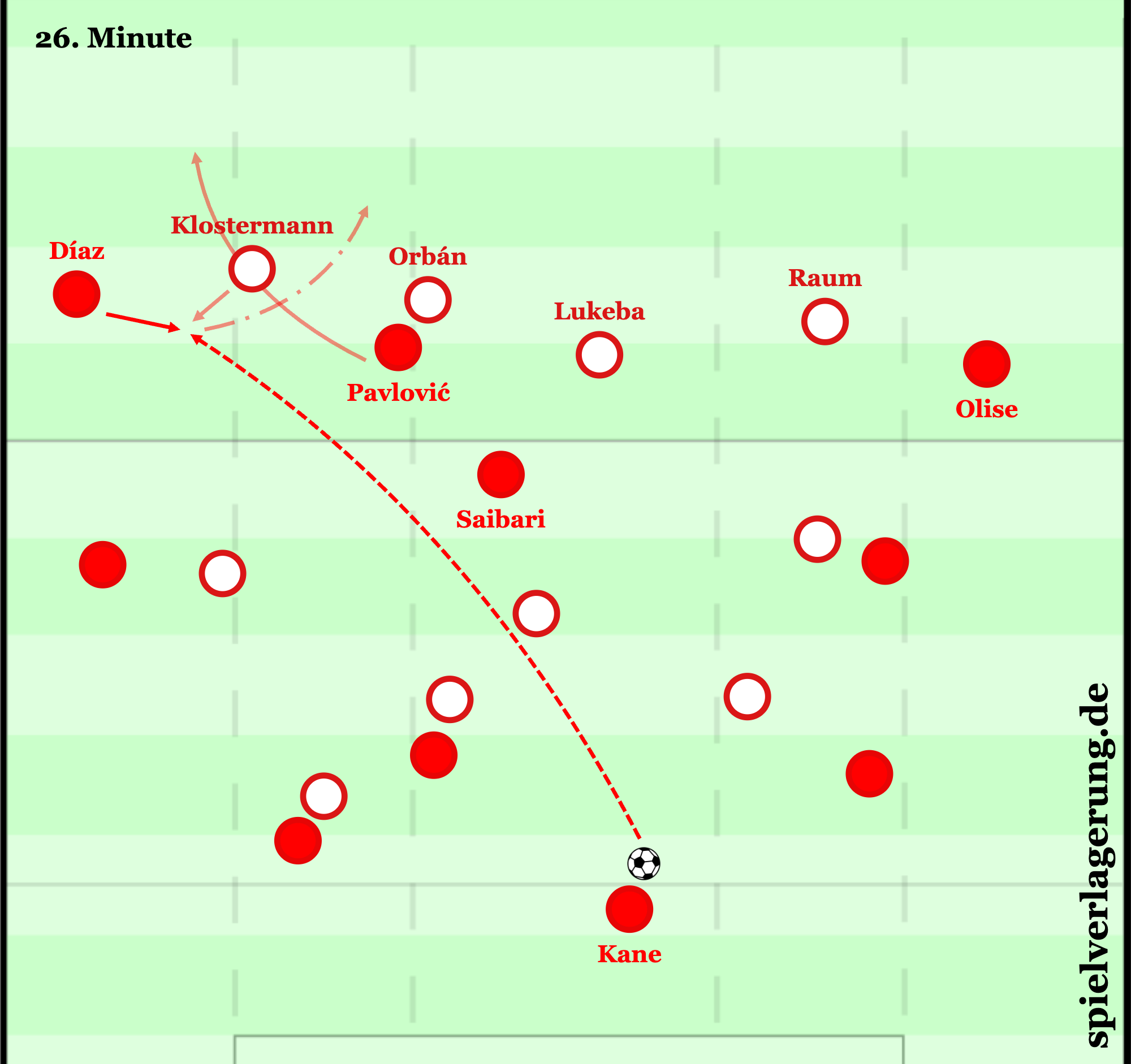
2-0, Aleksandar Pavlović (26.) — Kane dropped deep, and Leipzig failed to shift across together. He had time to turn and play a long pass through the space in front of the back line. Díaz moved into the passing lane and got to the ball ahead of Klostermann, then carried it centrally at Orban. That run drew Orban and Lukeba toward him and opened the left side for Pavlović, who had been holding a high position there. Pavlović overlapped and finished with his left foot.
The route differed from the opener, but the underlying issue remained: Leipzig did not close down the passer, and the team’s narrow positioning left space for Bayern to attack quickly.
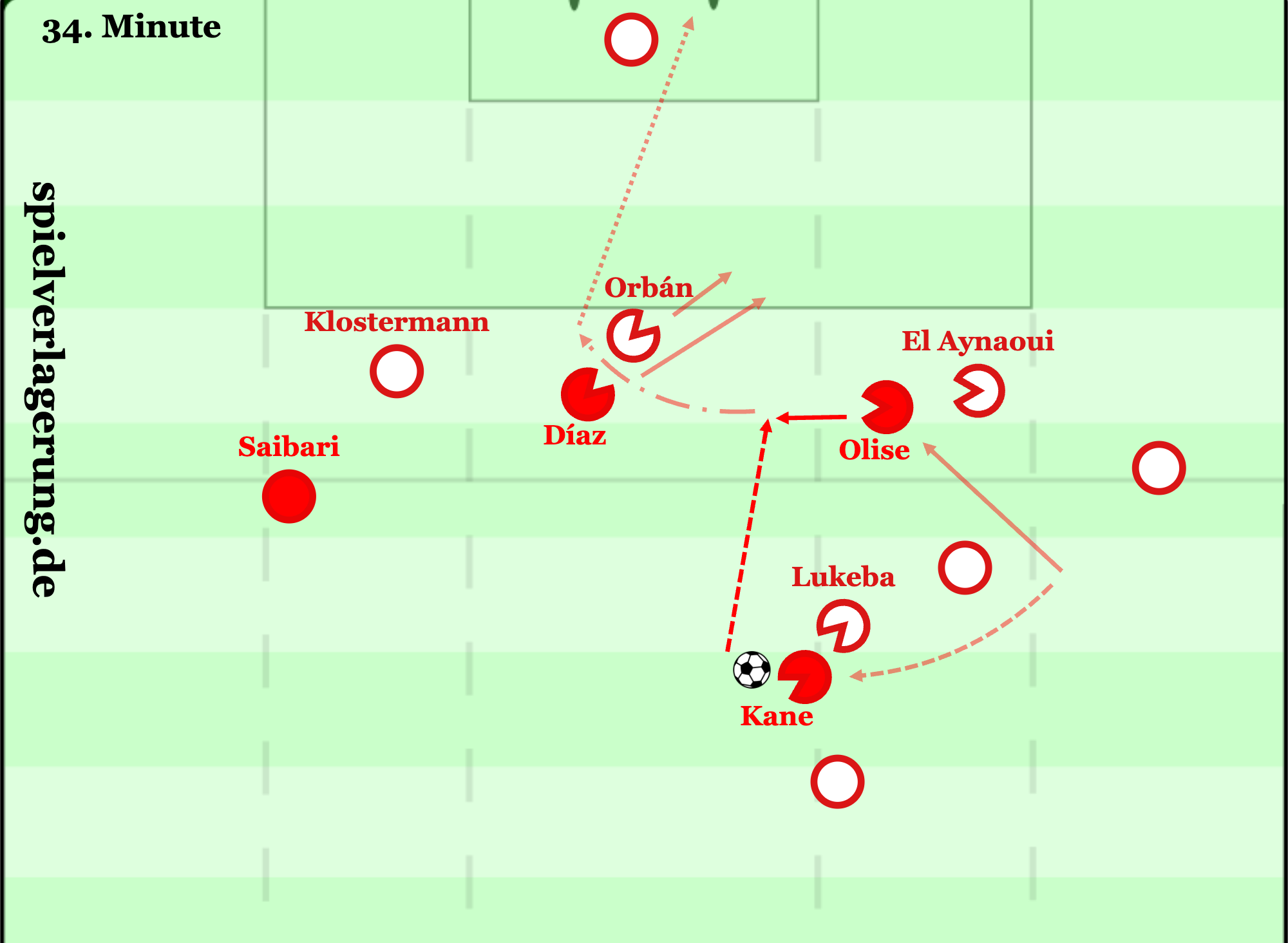
3-0, Michael Olise (34.) — Bayern’s pressure was especially clear after a Leipzig throw-in. Their players followed opponents closely and handed them over as the ball moved. Raum’s misplaced pass was not enough to disrupt Bayern’s attack: the tracking and duels failed to stop the next pass, and Kane was able to open up the play.
Olise moved inside from the wing, but Banzuzi and his nearby teammate did not pick him up. Díaz ran beyond and drew Orban with him, while Saibari’s positioning kept Klostermann wide. Olise received room to play the decisive pass, then finished across Vandevoordt’s movement into the far corner.
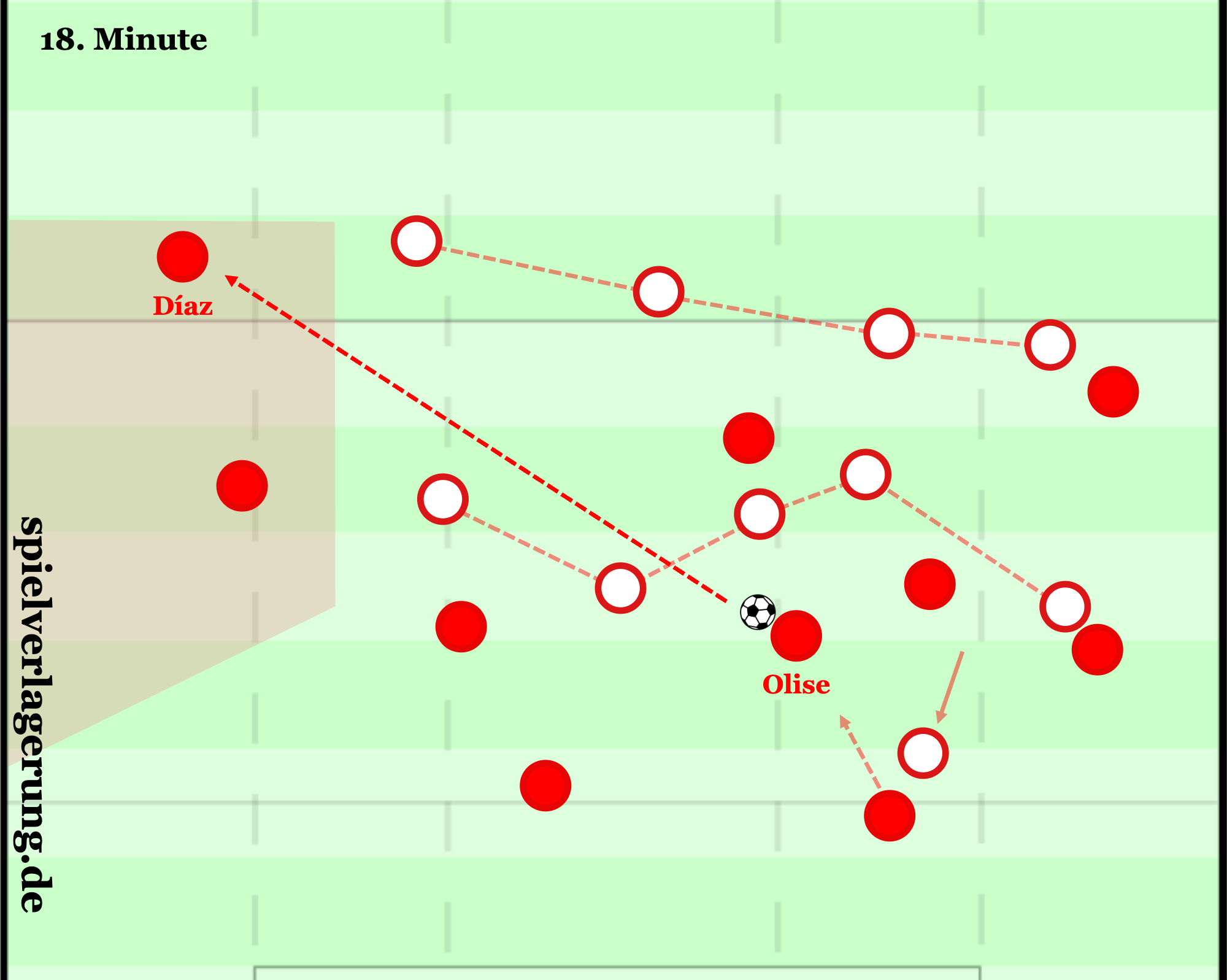
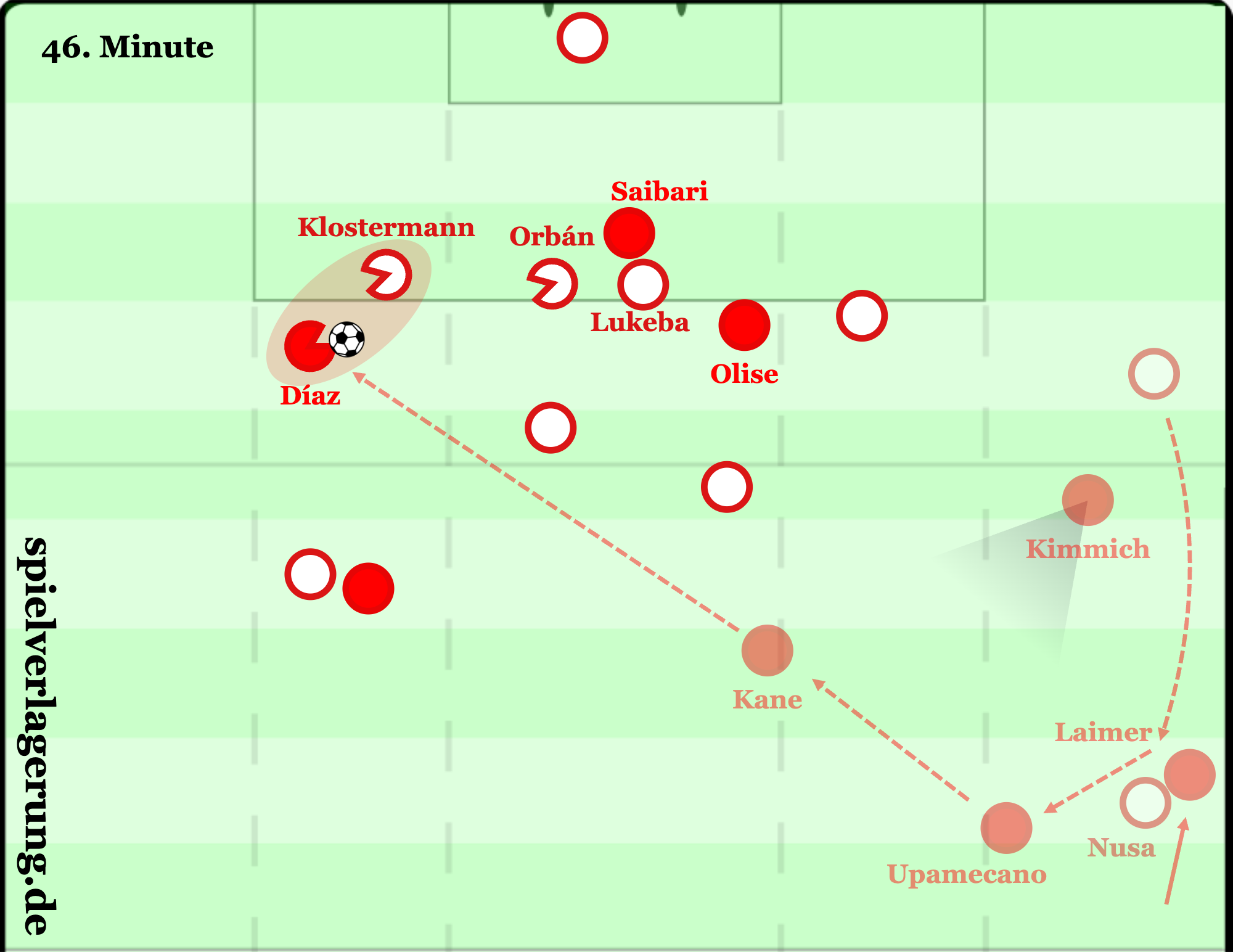
4-0, Luis Díaz (47.) — Bayern won the ball and quickly moved it to the far side. A diagonal pass put Díaz into another one-on-one. Leipzig had several chances to contain the move: close the central route, send Orban out sooner, and get Klostermann into the duel. They did none of those in time. Vandevoordt also left the far corner open, completing a situation that had developed from Bayern’s switch of play.
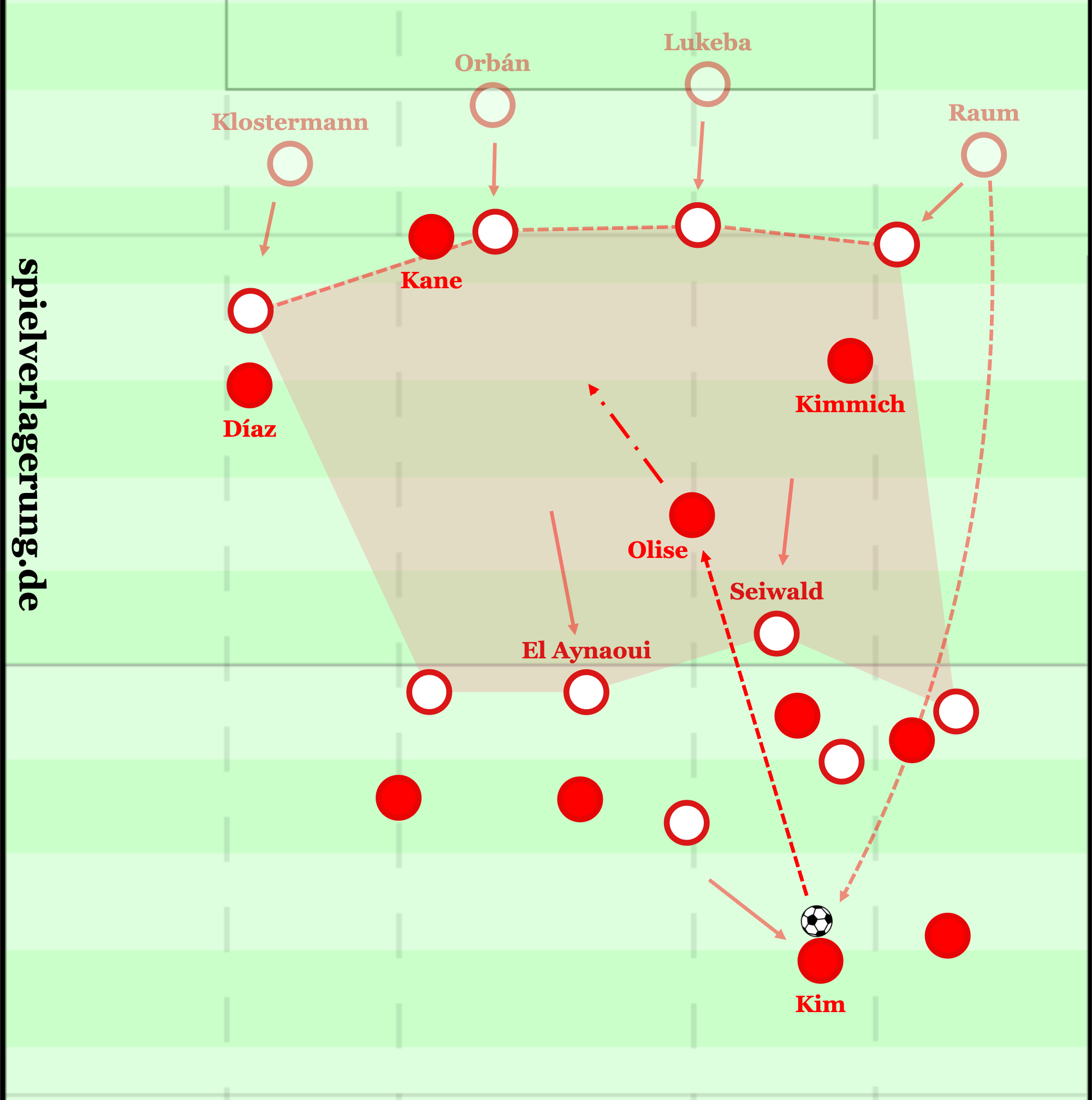
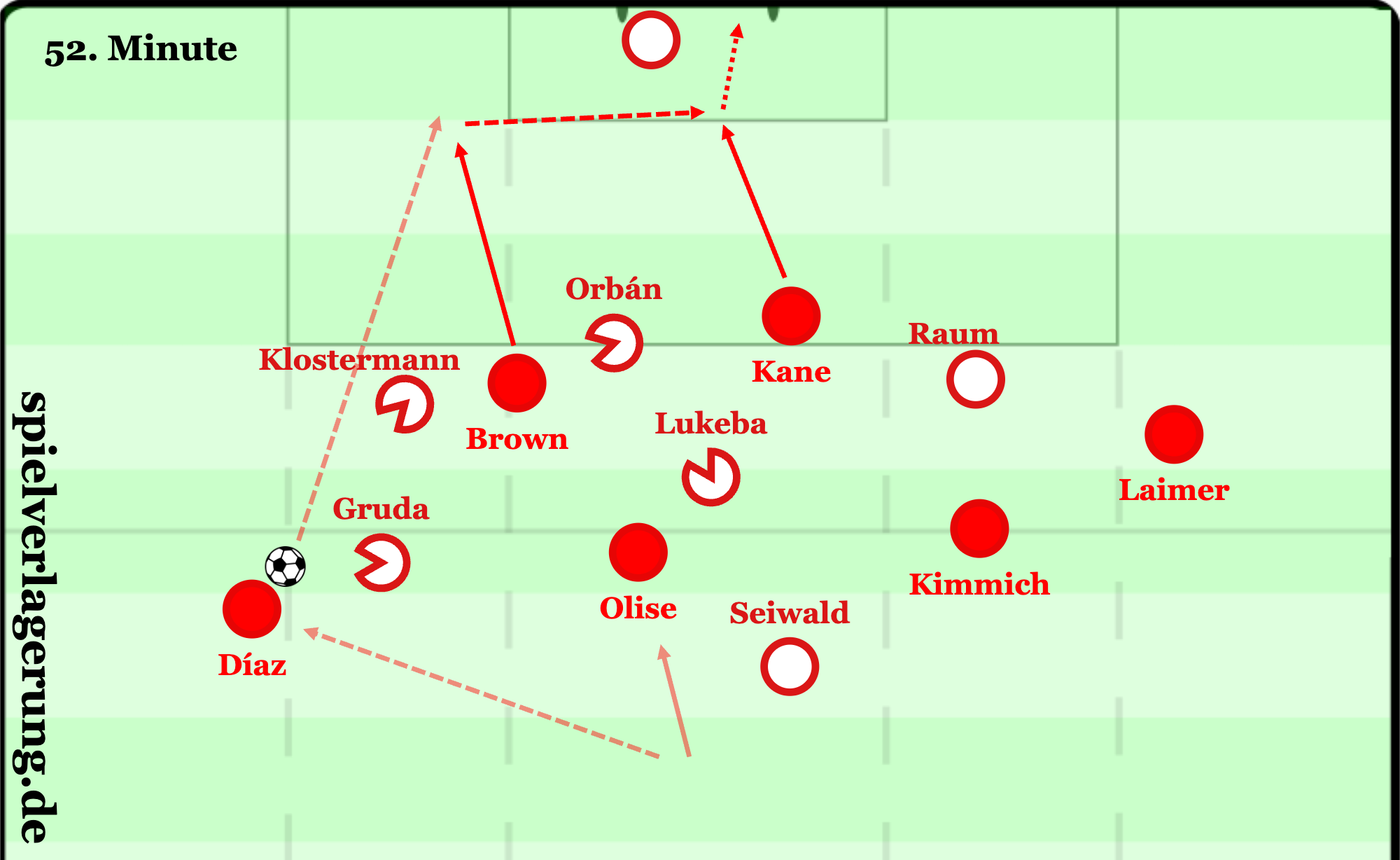
5-0, Harry Kane (53.) — This goal exposed the space Leipzig left between their lines. After playing a long ball without building pressure around it, Leipzig’s forwards and midfielders counterpressed, but the back line stayed deep. That split opened a large pocket for Olise. Kim found him with one pass, taking six Leipzig players out of the play.
Olise advanced and set up Díaz, who again had a one-on-one. Brown joined the attack and moved inside, but Klostermann did not track his run from the half-space. Kane then dropped into Orban’s blind side, a movement Bayern had used throughout the match. The attack ended with a two-against-one against Vandevoordt.
6-0, Luis Díaz (69.) — A set piece gave Bayern a five-against-four on the flank. Gnabry occupied Leipzig’s defenders and created room for Díaz. Orban took a large step toward the ball but still did not reach Díaz in time. The move echoed the fourth goal: a one-on-one on the outside, with Leipzig unable to close down the space or engage the attacker. Different phase of play, familiar defensive response.
6-1, Andrija Maksimović (90.+1) — Leipzig’s goal offered a contrast. Bayern dropped into a deeper block, and Leipzig combined through the middle before moving wide. Gruda faced Brown one-on-one. Upamecano moved across, but left a gap between himself and the defender, opening the route for a quick one-two. The Bayern players narrowed their attention around that combination, leaving Maksimović free behind it. He took two touches on his left foot and finished unopposed.
One recurring failure, several ways to punish it
Five of Bayern’s six goals followed the same broad pattern: Leipzig did not apply enough pressure centrally, and the defensive line failed to manage the space behind it. Díaz found himself isolated against a defender three times. Orban was late stepping out on two occasions, while Kane repeatedly moved into his blind side.
Klostermann had a difficult match, but the individual errors came inside situations that Leipzig’s defensive structure had already allowed to develop. Bayern’s rotations disrupted the press, Leipzig’s compact shape made switches effective, and the exposed defender was left to solve the final duel without adequate cover.
That’s the key reading of the scoreline: Bayern kept returning to the same vulnerabilities, even as the details of each attack changed. Leipzig’s late goal showed how a quick combination could open space when a defender stepped across without closing the centre. Until Leipzig can press as a unit and keep their lines connected through transitions, opponents will have a clear route from a central overload to an isolated wide duel.
LC is often found in a classroom, happiest on a football pitch, and occasionally on LinkedIn.