Leandro Paredes will not face disciplinary action following his involvement in a chaotic post-match brawl after Argentina's World Cup final loss to Spain. Despite widespread reports during the match broadcast, including outlets like ITV and BBC, FIFA has confirmed that Paredes was not sent off.
The Post-Match Chaos
After the final whistle in New Jersey, tempers flared when Spanish substitutes rushed onto the pitch to celebrate their victory. This kind of post-match confrontation isn't unusual when emotions run high, especially in high-stakes scenarios like a World Cup final. Add in the fierce rivalry that exists between Argentina and Spain, and what unfolded doesn’t seem that shocking. However, what transpired next was more than just a heated exchange of words.
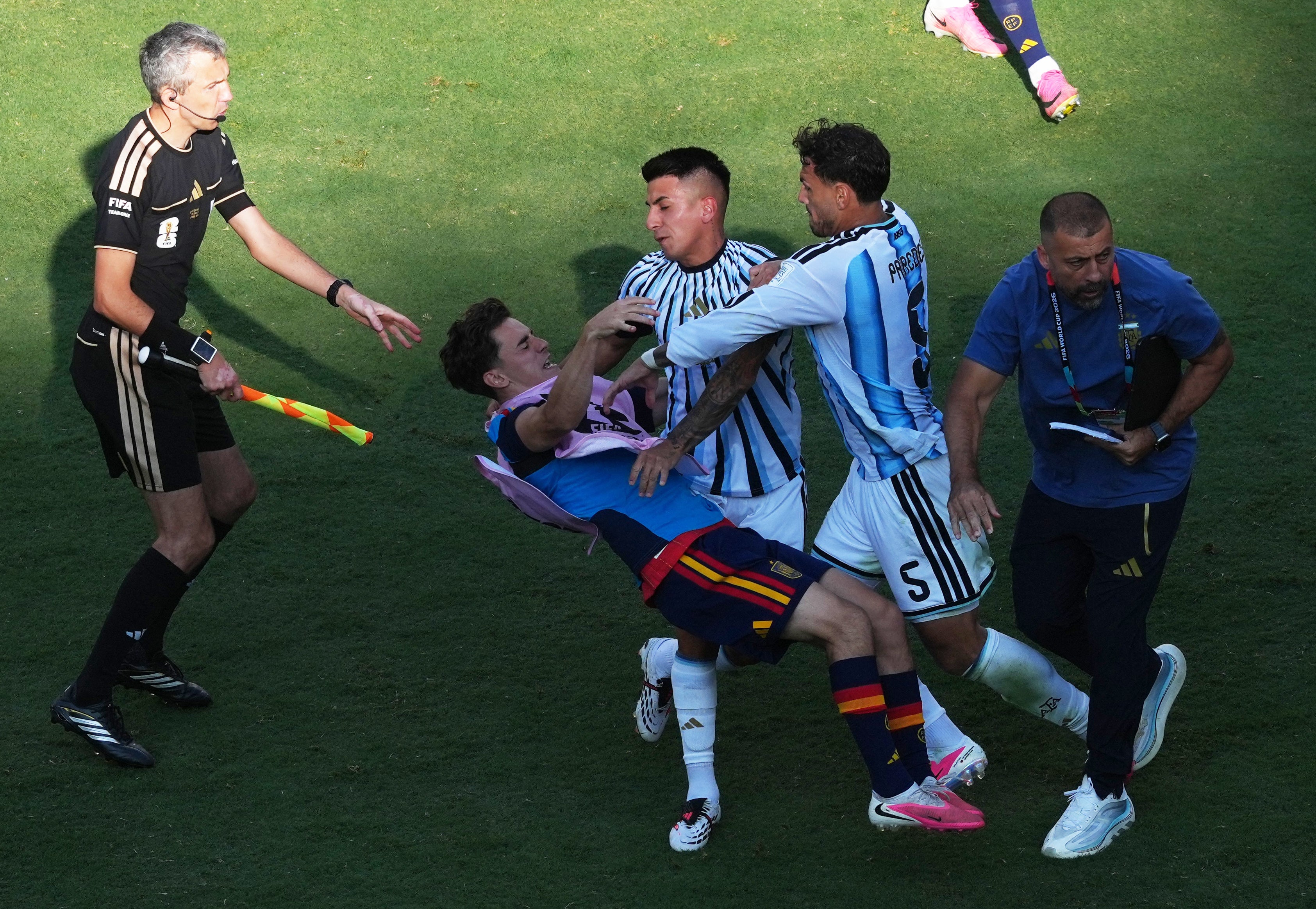
The situation escalated dramatically when Argentine defender Nahuel Molina appeared to punch Spain's captain, Rodri. Physical altercations can ignite quickly, often fueled by the adrenaline of the moment—players’ bodies wired in competition, then suddenly faced with defeat. Paredes then engaged physically, grabbing Eric Garcia by the throat before pushing him to the ground. This is not just a typical post-match interaction; it highlights the emotional volatility of players who have just experienced the agony of losing such a pivotal match.
Escalating Tensions
Things continued to heat up as Paredes tackled Spain’s Gavi, forcing him to the ground while pushing his face. The incident didn't end there; it drew in more players and staff, intensifying an already fraught atmosphere. This hands-on confrontation prompted Argentina's manager, Lionel Scaloni, to rush onto the field, attempting to calm the situation among his players. His intervention was crucial; while players are expected to act on instinct, a figurehead like Scaloni can help de-escalate potentially dangerous conflicts. It's easy to see how quickly things can spiral out of control in such emotionally charged situations.
The Referee's Role
Contrary to the early reports that Paredes received a red card, FIFA's sources clarified that the officiating referee, Slavko Vincic, did not issue such punishment. Instead, the only player receiving a red card was Argentine midfielder Enzo Fernandez, who was penalized for a second yellow card late in the match. This discrepancy between reports and official accounts raises questions about media accuracy in high-pressure moments. With so many eyes on the game, one can understand why misinformation might spread, but it also brings to light the challenges referees face in managing players with high emotions.
FIFA's Response and Investigation
FIFA has initiated an investigation into the incident, appointing a Disciplinary and Ethics Prosecutor to examine the melee's context. This move aligns with FIFA's proactive stance on maintaining discipline and order within the sport. Transparency in such cases is expected, especially given the magnitude of the event. A statement issued by FIFA confirmed the review process, aligning with Article 36 of their Disciplinary Code regarding potential breaches of conduct. Such investigations often aim to confirm facts, assess potential penalties, and provide clarity to the footballing world.
As the situation develops, FIFA plans to release more information once the prosecutor's report is finalized. The football community will be watching closely to see if any further actions are taken as a result of the altercation that marred an otherwise celebrated event. The anticipation surrounding potential outcomes raises broader questions about the role of authority in maintaining sportsmanship among players who are often driven not just by competition, but also by national pride.
The Bigger Picture
What this means for you, the fan or analyst, is that the repercussions of these incidents often extend beyond disciplinary action. The emotional aftermath can linger, affecting team dynamics moving forward. For players, these moments can shape their reputations—both positively and negatively. Some might argue that such displays of passion and anger detract from the spirit of the game. Others might see it as a sign of dedication and commitment to their national team, leading to an intense discussion about what behavior is acceptable on the pitch. (And this is the part most people overlook.) In an environment where every gesture is scrutinized, players are tasked with navigating the fine line between aggression and sportsmanship.
This incident might just be a momentary blip in the grand narrative of international football, but its implications could resonate longer as teams prepare for their next competitions. With heightened awareness around player conduct, the ongoing conversations surrounding sportsmanship could lead to expanded frameworks and policies regulating behavior on and off the pitch. The footballing world won't forget this brawl anytime soon, and neither should we.