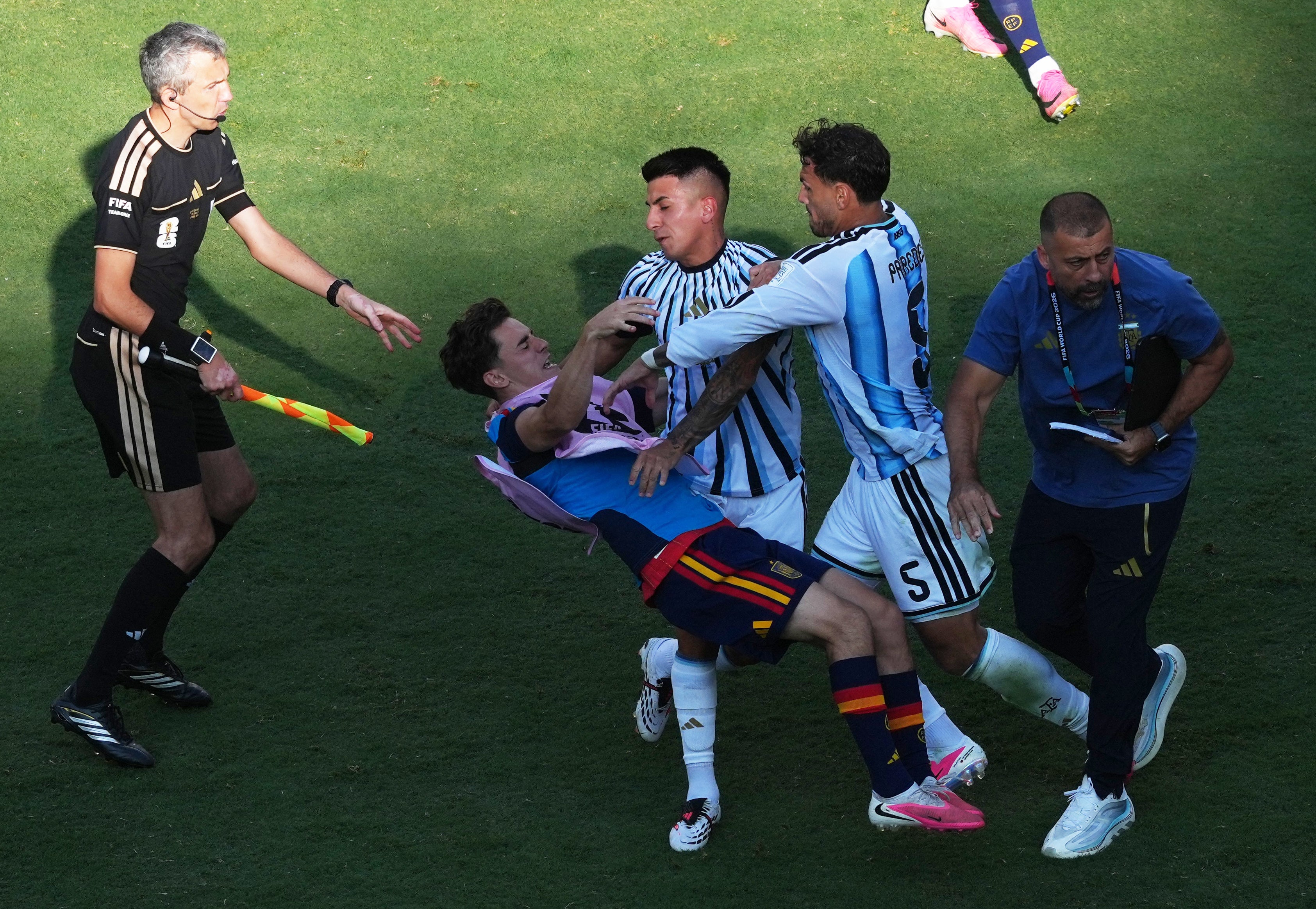
Following Argentina's distressing defeat to Spain in the World Cup final, the fallout is now overshadowed by a violent brawl that erupted on the pitch. Leandro Paredes received a red card post-match after a confrontation with Spain's Eric Garcia and Gavi, coupled with Nahuel Molina's apparent swing at Spain captain Rodri.
Escalation of Tensions
The skirmish illustrates how quickly tensions can escalate in high-stakes matches. The incident began innocuously enough, as Spaniards Mikel Oyarzabal and Rodri navigated past Molina. However, that simple exchange ignited a full-blown brawl, highlighting the underlying rivalries that often simmer beneath the surface in international football. It’s a sharp reminder that these players are not just athletes vying for a trophy; they are representatives of their nations, and emotions run high.
When the referee’s final whistle blew, it wasn't just the end of a game—but also the release of pent-up frustrations. The build-up of emotions throughout the tournament, especially given Argentina's previous encounters, contributed to the explosive nature of the confrontation. Football can be a mirror reflecting broader societal sentiments, and in this case, the outbursts may reflect Argentina's struggle with pressure and expectations.
The FIFA Investigation
FIFA has confirmed an investigation into the chaotic scenes that unfolded, with potential disciplinary actions pending. The stakes are high, particularly given Argentina's prior semi-final antics against England, which involved players displaying a politically charged banner. This too could come under FIFA's scrutiny in the ongoing inquiry.
According to FIFA's Disciplinary Code, a minimum three-match suspension awaits players involved in violent conduct, which places Paredes and Enzo Fernandez—both sent off—on thin ice. Each will face one-match bans for their next competitive match. While this may align with FIFA's standard operational protocol, the reality is that this incident carries the weight of Argentina’s recent reputation for on-field conduct and could warrant more severe penalties.
A FIFA spokesperson has indicated that the independent Disciplinary Committee is rigorously examining the match reports to determine the appropriate actions based on the incidents' specifics. You'll want to pay attention to how they interpret violence versus unsporting behavior. This assessment could likely set a new benchmark for the treatment of similar situations in future tournaments, influencing not only individual player behavior but also team dynamics on a larger scale.
Historical Context of Player Conduct
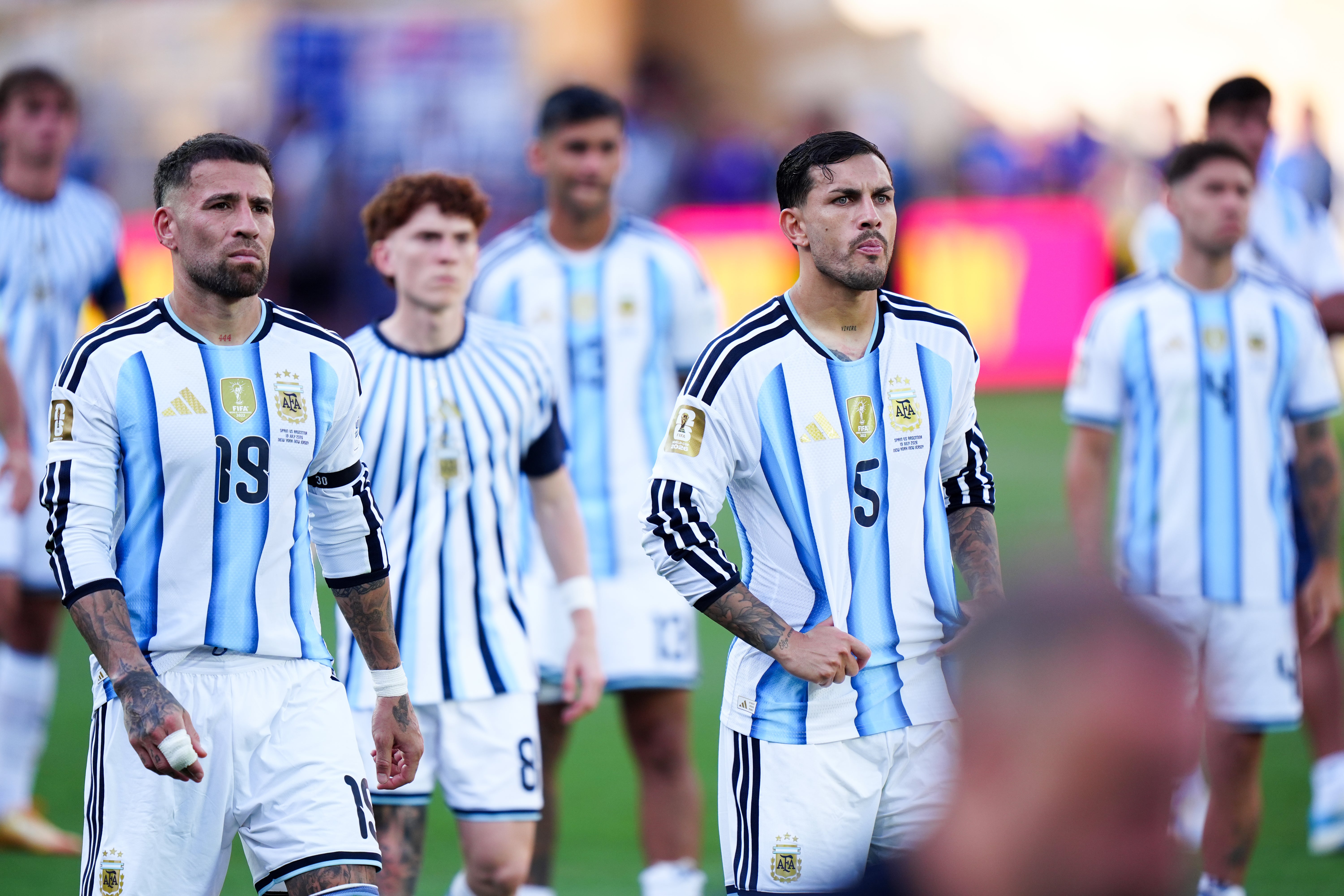
Reflecting on player conduct, it's essential to put Paredes and Molina's actions in historical perspective. While their actions might lack the extreme notoriety of past infractions, like those from Luis Suarez during the 2014 tournament or Zinedine Zidane at the 2006 final, they still pose potential for significant repercussions. Post-match behavior can sometimes be seen as a reflection of a team's mindset and readiness to face the consequences of their actions. The lack of a referee's penalty for Molina complicates the narrative—if officials didn't see an infraction worth penalizing during the match, should an after-the-fact reaction be more stringent?
Implications for Argentina’s Footballing Image
Compounding the issue, should FIFA find substantial misconduct, the Argentine Football Association could also face sanctions. Historical precedents exist wherein national teams have been penalized for collective discipline issues on the field, potentially leading to broader repercussions that extend beyond individual player bans. This isn’t just about a single match anymore, it’s about how Argentina’s national pride might be marred in front of the world.
The culmination of Argentina's tournament run has tarnished what could have been celebrated as an emotional journey toward a second consecutive World Cup. With Lionel Messi possibly playing his last World Cup match, the events that led to this unsavory conclusion contrast sharply with the legacy he sought to solidify. Could this tarnish be permanent? Will future players have to overcome this stigma? The fallout may hinder not just the current squad, but also affect recruitment and development in the Argentine football community.
Post-match reactions reach far beyond the immediate players and staff, as calls for FIFA to reassess Argentina's demeanor following their semi-final win over England were already reverberating. This iteration of the issues reflects the pressure cooker environment players navigate, one filled with expectations from both fans and federations alike. FIFA's prior actions reflect a rigorous enforcement of sporting conduct, evidenced by past penalties for politically laden displays on the pitch.
The football community is eagerly awaiting FIFA's determinations. What this means for you—if you're working in this space—is that the outcome could redefine disciplinary norms and reshape player conduct at global tournaments. The implications might well reshape not just the culture surrounding the game but also expectations imposed by fans, sponsors, and governing bodies.