Fantasy Premier League (FPL) enthusiasts can gear up for the 2026/27 season, as a newly released draft tool provides an opportunity to start constructing your ideal 15-man roster. This tool comes at a pivotal time, as FPL managers sharpen their analytical skills ahead of the new season, aiming to optimize their squads and capitalize on potential player performances.
While official price points remain under wraps, we bring you machine-generated price estimates derived from nearly 2,000 historical data points over the past five seasons. It’s a predictive model that aims to reflect potential player valuations, though adjustments will be made in the coming days for players who are clearly mispriced, such as Marcos Senesi, currently estimated at £4.5m. This predictive model, however, doesn't just pull out of thin air; it benchmarks every player's past performances against external variables, though whether it can stand the test of time remains to be seen.
If you observe any discrepancies in the projected prices, you have the option to amend them easily by clicking on the player’s name during your squad building. This flexibility is significant, allowing managers to tailor their experiences based on personal insights and evolving player performances.
Getting Ready for Gameweek 1
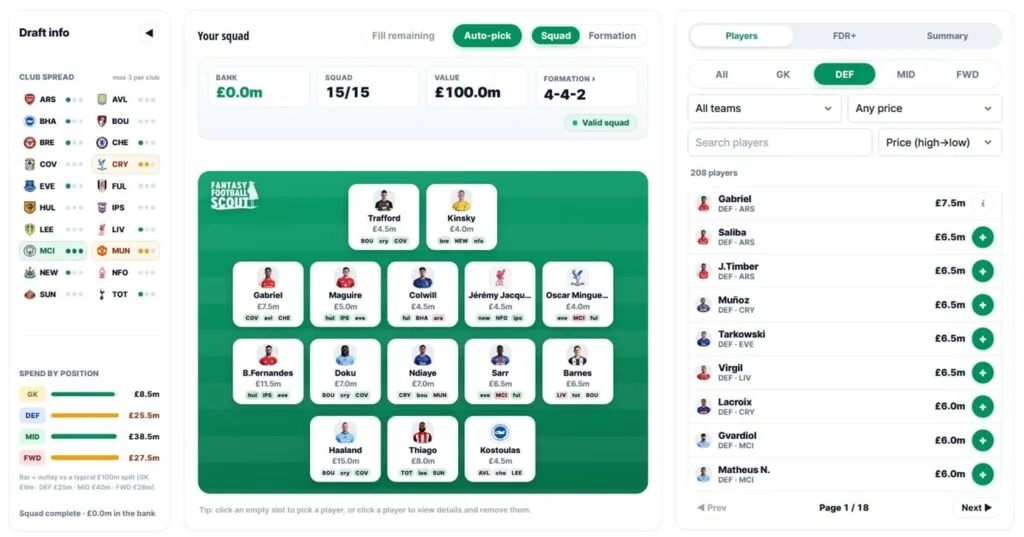
As the clock ticks down to Gameweek 1, players have the chance to craft their ultimate teams. We have designed the tool for easy navigation, offering 15 squad spaces and a budget of £100 million. The player list on the right is categorized by position, price, or team, making selections straightforward. Just hit the ‘plus’ button to add players to your squad. This intuitive design acknowledges that users often juggle multiple strategies and preferences, emphasizing the importance of user experience in fantasy sports tools.
On the left side, you can monitor your club coverage and how your budget is allocated across different player positions. This offers not just a view of your current selections but provides insight into whether you're over-relying on specific teams or player types. Multiple drafts can be saved for strategic flexibility, which is a handy feature in a game where injury reports and last-minute transfers can shake everything up. And player images enhance your experience, giving a quick visual reminder of who’s in your team and their recent performances. It reflects a broader trend in fantasy sports towards more engaging interfaces.
Predicting Player Prices
Setting the initial prices is complex, particularly with significant player changes this summer, including Mohamed Salah's exit from Liverpool and new player metrics from their debut seasons. Pricing strategies often hinge on past statistics, but they also need to consider the fluid dynamics of team rosters and player form. That can lead to mispricings that savvy players will be quick to exploit.
Your opinions on predicted prices can easily be integrated; just click on any player to adjust their value before adding them to your selection. This participatory aspect empowers managers to think like mini-analysts. They aren't just playing a game; they're engaging with statistical probabilities and risk assessment. You won’t just be an FPL manager; you’ll find yourself becoming more knowledgeable about player dynamics and market trends.
With attention shifting post-World Cup, take advantage of this tool to jumpstart your strategies for FPL 2026/27. Remember that the impending season will see not only shifts in player functionality but also changes in fan engagement and managerial styles, as competition heats up.
Implications for the Upcoming Season
This draft tool’s launch signals a shift in how FPL players prepare for a season. The interactivity offered would likely attract both seasoned players and newcomers alike—the former might appreciate the analytical depth, while newcomers find a more engaging entry point into the world of FPL.
If you're working in this space, you might want to consider how such tools impact player engagement and overall competitiveness in fantasy football. The ability for users to adjust and influence player valuations isn't just a convenience; it could redefine how strategies are developed from here on out.
What this means for you is clear: being adept at using these technological tools could enhance your chances of succeeding in a fiercely competitive environment. It might seem like a simple drafting exercise, but the implications of this technological evolution are deeper. Managers who can capitalize on the predictive insights and leverage the customizable features will likely have the edge in a game that increasingly rewards strategic foresight.
So, this isn’t just a shiny new tool; it’s a potential revolution in player engagement and team building for the 2026/27 season. (And this is the part most people overlook) As the players who benefit the most from technology tread forward, the question remains: will casual gamers keep pace, or will they fall behind in an era where data becomes king?